


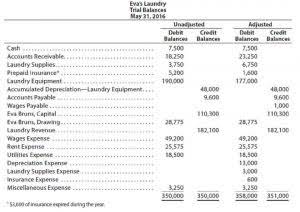
This method allows small businesses to track actual cash flows, making it easier to understand the real-time financial status of the business. It provides a more accurate long-term view of your profitability and financial position, which is crucial for making strategic decisions, securing loans, and attracting investors. Records transactions when you earn income or incur expenses, regardless of payment timing. When you jump from cash to accrual, you suddenly have to account for all the income you’ve earned but haven’t received yet cash basis accounting measures income based on (your new accounts receivable).
What is accrual basis accounting?
The IRS sees this as a formal Purchases Journal change and requires you to file Form 3115, Application for Change in Accounting Method. This form is no walk in the park; most business owners get help from a tax professional to get it right. At the end of the day, if your eyes are set on growth, scale, and bringing in outside capital, the rich, accurate financial narrative told by accrual accounting is non-negotiable.
It Gives an Accurate Snapshot of Cash-on-Hand
It also does not adhere to the Generally Accepted Accounting Principles (GAAP). This approach allows businesses to recognize income when it is received and expenses when they are paid, providing a clear reflection of the company’s cash flow. The primary disparity between cash basis and accrual basis accounting stems from their contrasting approaches to revenue and expense recognition.
Core Principles of Revenue and Expense Recognition
- TAS can provide a variety of information for tax professionals, including tax law updates and guidance, TAS programs, and ways to let TAS know about systemic problems you’ve seen in your practice.
- There are special IRS rules that must be followed when using a hybrid approach.
- This could occur, for example, if a partnership interest was transferred for the purpose of qualifying for a particular tax year.
- While cash basis accounting is wonderfully straightforward, it isn’t a one-size-fits-all solution.
- As you move through the chapter, you’ll get to see the impact of the two methods of accounting and how these methods impact the insights and decisions Chris made for her new business.
- See Accounting Periods, earlier, for a description of permissible tax years.
- Businesses can either use the cash basis accounting method or the accrual method.
In this case, the expense is considered paid on the date it’s charged to the card. These 3 statements provide a picture of all financial performances at a specific point in time. Generally Accepted Accounting Principles (GAAP) do not allow cash basis accounting to be used.
Financial software that helps you run your business and pay your team better.
You’d switch because your business has grown to a point where “simple” is no longer enough. As your operations become more complex—perhaps you have more clients, larger projects, or outstanding bills—the cash method can start to hide the true story of your financial performance. Switching to accrual is about gaining the clarity you need to make smarter, long-term strategic decisions. It’s a sign that your business is maturing and requires a more sophisticated way to measure its health and plan for the future. Cash basis accounting measures income based on cash received, not invoices.
- While the cash method records transactions when money moves, the accrual method records them when they are earned or incurred.
- The costs of keeping your books with cash-basis are usually lower than other methods.
- Don’t send tax questions, tax returns, or payments to the above address.
- This means that if you received the order and shipped the hats on a Monday and their payment came in on Friday, you wouldn’t record the sale until Friday.
- This includes all cash disbursements like payments for goods, services, rent, utilities, and salaries.
Balance

These practices help in ensuring that the financial statements reflect a true picture of the company’s cash flow situation and aid in strategic financial planning. Choosing between cash basis and accrual basis accounting often depends on the specific needs of the business, the scale of operation, and the legal requirements that apply to the particular entity. For small businesses looking for simplicity and direct cash flow management, cash basis accounting often proves to be the most efficient method. However, businesses that deal with a lot of credit transactions, or those that require detailed financial reports for stakeholders, may find accrual basis accounting more suitable.

The IRS uses the latest encryption technology to ensure that the electronic payments you make online, by phone, or from a mobile device using the IRS2Go app are safe and secure. Paying electronically is quick, easy, and faster than mailing in a check or money order. This tool lets your tax professional submit an authorization request to access your individual taxpayer IRS online account. The IRS is committed to serving our multilingual customers by offering OPI services. The OPI service is a federally funded program and is available at Taxpayer Assistance Centers (TACs), other IRS offices, and every VITA/TCE return site.
Accrual vs Cash Basis Mismatch in KRA’s eTIMS Validation
Under this method, the accounts payable and receivable are not accounted for because actual cash does not change hands. Thus, revenue and expense is recognized when cash is paid or received irrespective of whether the goods and services have been provided or not. They are suitable for small businesses which do not have a large number of complex transactions to record. It can also be used by individuals who want to record their personal financial https://healthcloudsystems.com/2021/03/04/free-accountant-business-card-designs-and/ transaction for better money management. The way cash basis accounting presents your finances can significantly affect your ability to grow. Because it can make your profits appear inconsistent or lower than they actually are, you may find it harder to secure financing.
This method is generally followed by individuals and small businesses with no inventory. However, it only considers two types of transactions, i.e., cash inflows and cash outflows. In this method, a single-entry accounting system is followed since, for each transaction, a single transaction record entry is made. Since there is no tally between revenue and expenses in that particular accounting period, comparisons of previous periods are not possible.